Where UDig builds on UDig first

We build the other 20%.
On ourselves first.

Every platform gets you most of the way. The last 20% is where the work actually lives. We run it on ourselves first, then bring you what survives.

The tools we ship to ourselves first.

Three products, built inside UDig and used inside UDig before they ever reach a client. If they don't earn their place on our team, they don't leave the lab.

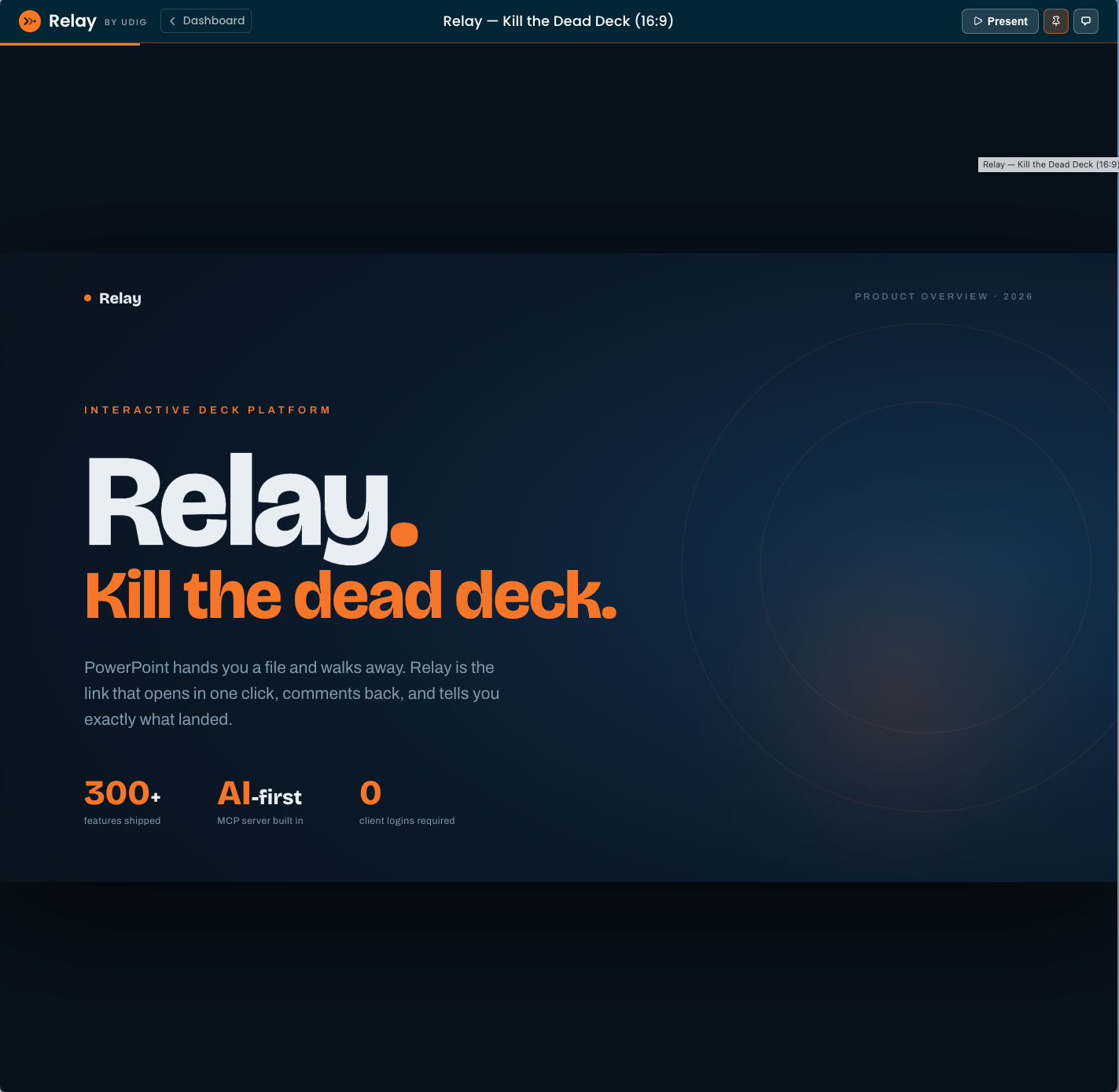
Relay artifact viewer presenting an interactive deck, with view, comment and present controls.
Artifact platform

Relay

Every artifact UDig ships, in one link.

PowerPoint hands you a file and walks away. Relay is the link that opens in one click, comments back, and tells you exactly what landed. Mockups, prototypes, docs and decks, uploaded once and instrumented the moment they go out, so a piece of work proves itself inside UDig before a client ever sees it.

Why we built it: AI moved from Markdown to living, interactive HTML, and suddenly we were making artifacts faster than we could share or keep track of. Relay ships each one as a link and tells us the moment it actually gets opened, read, and reacted to.

artifacts & versions view signal inline comments MCP built in
relay.udig.com
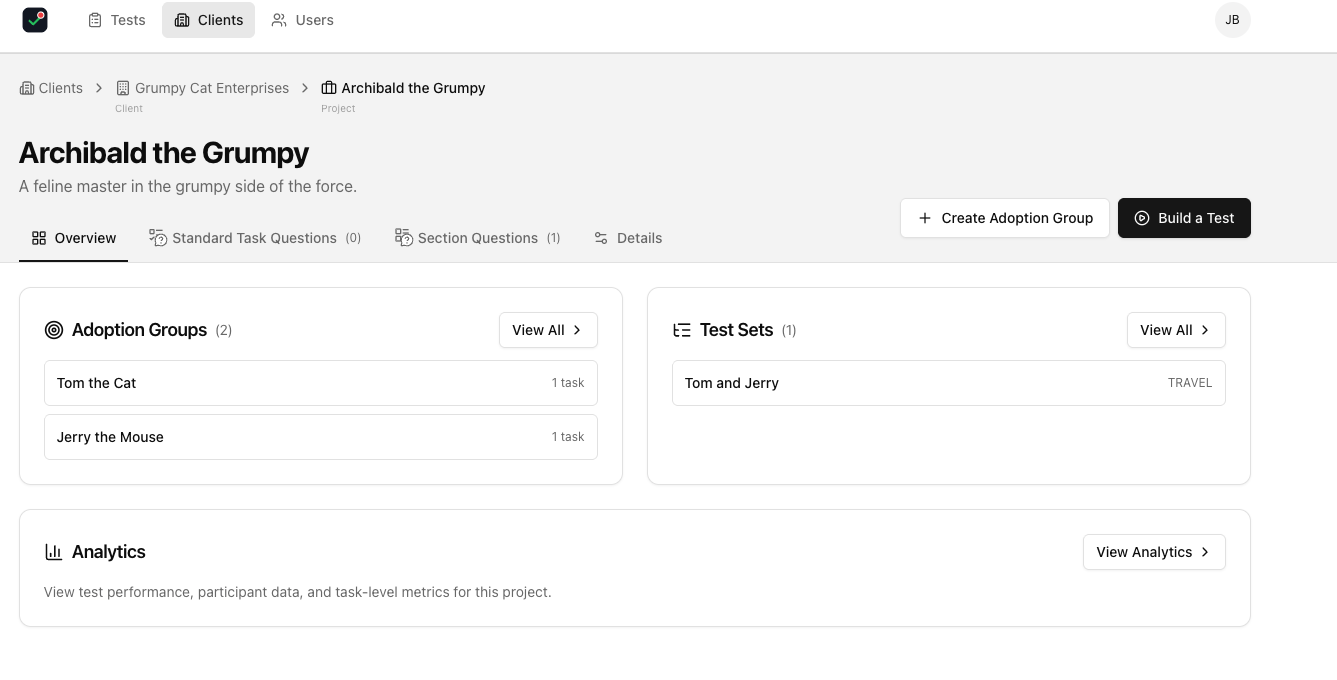
TAT project overview showing adoption groups, test sets and analytics for a client.
Field testing

TAT

Test it where the work actually happens.

TAT groups your real users, hands them the tasks to run on a tablet right inside their own workflow, and rolls the results into test sets and analytics, so you see what genuinely works before a rollout, not after.

Why we built it: the best feedback comes from watching someone actually use the thing, but that testing was still happening on paper. We moved it onto tablets and into the field, so you can sit beside real users in their own environment and catch the truth in the moment, not in a survey three weeks later.

adoption groups test sets task analytics
tat.udig.com
DQ Accelerator

Assay

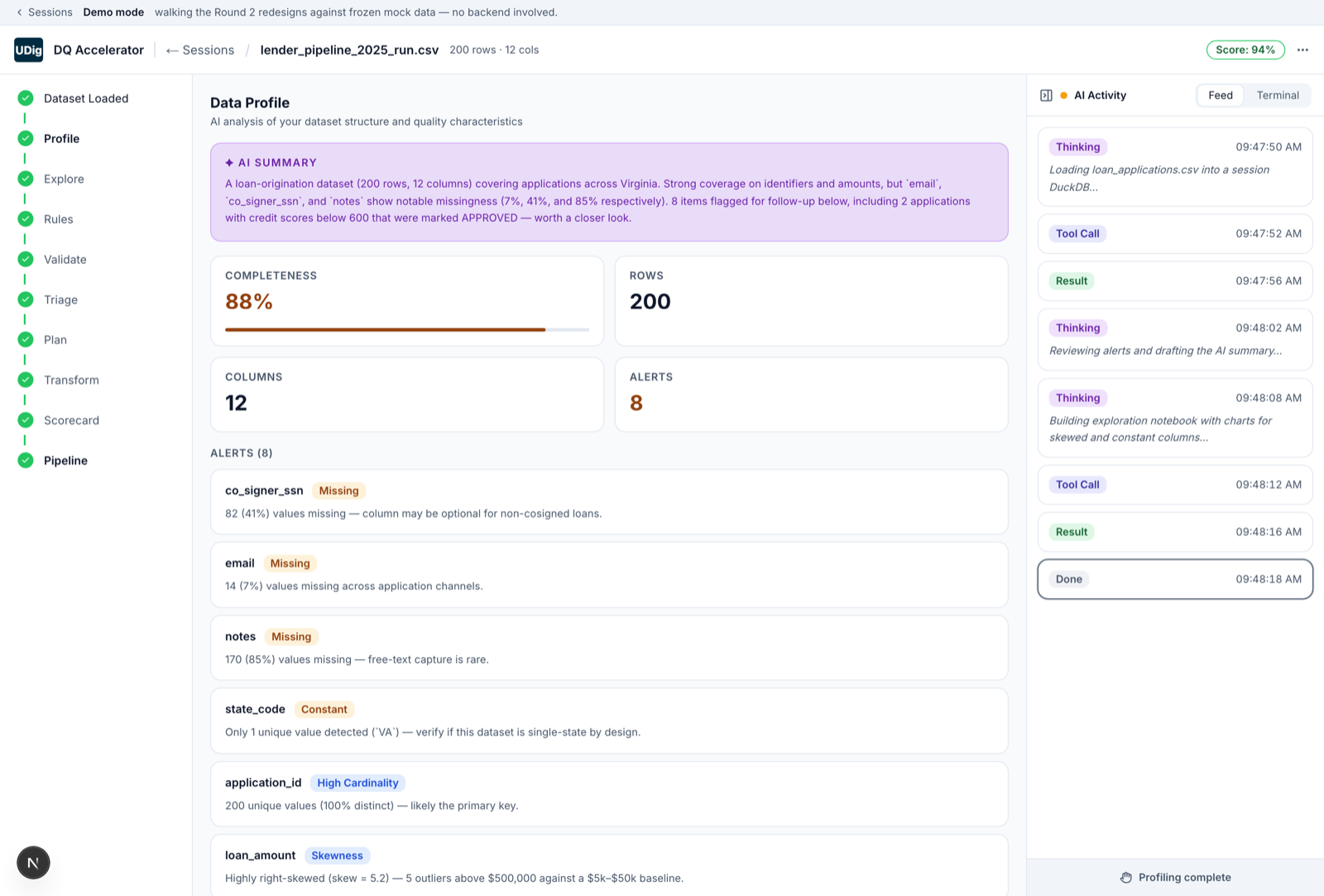
Is your data ready for AI?

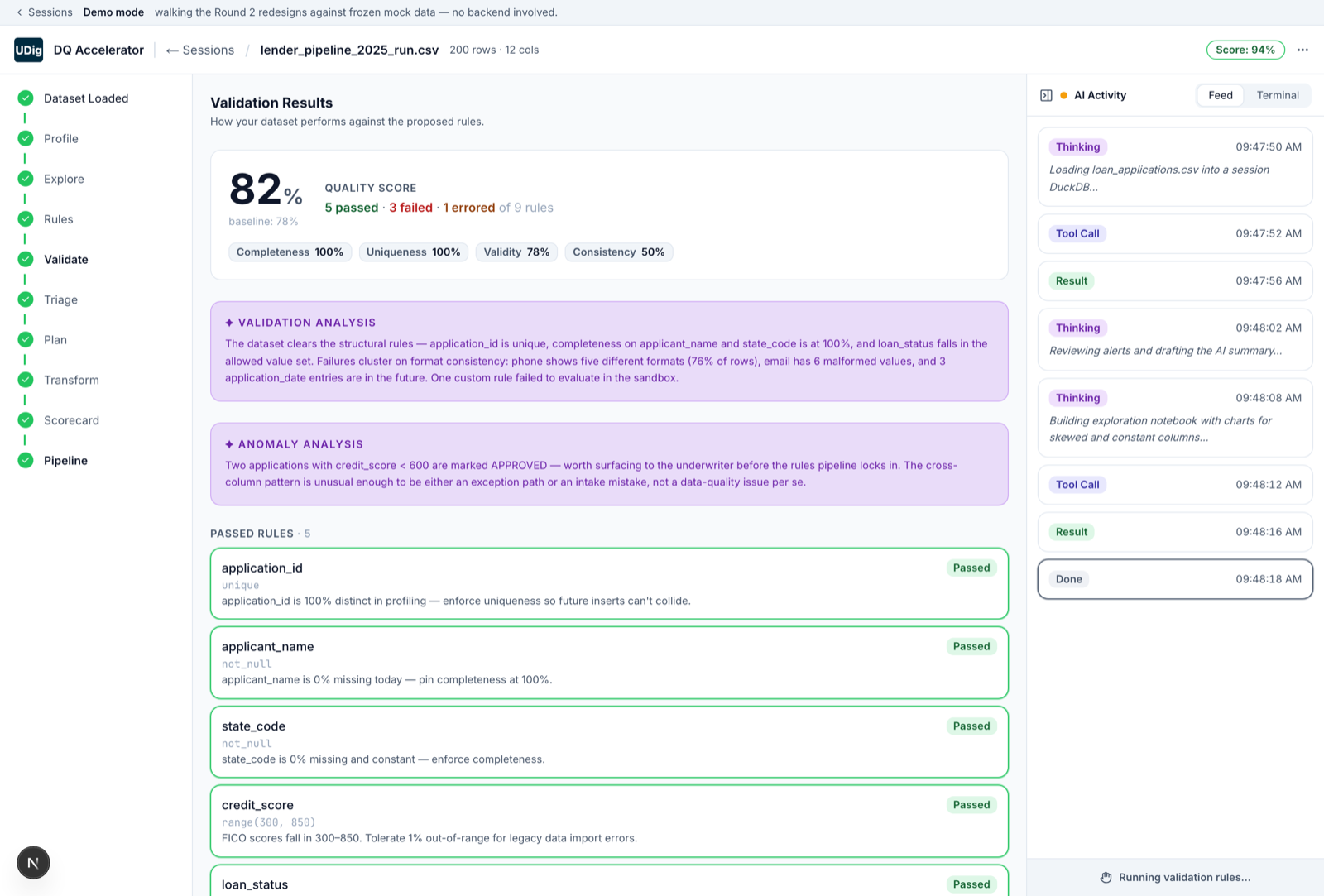
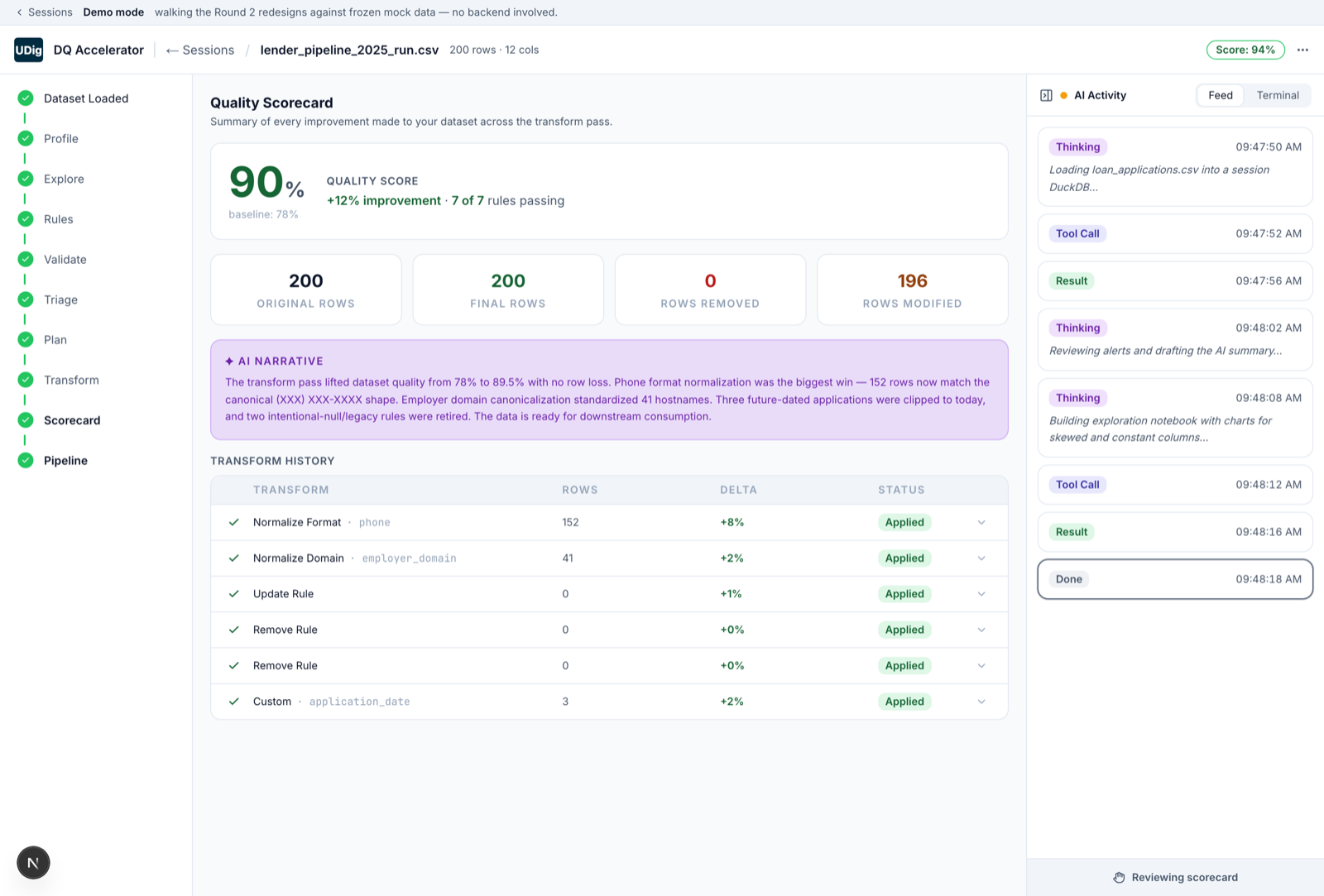
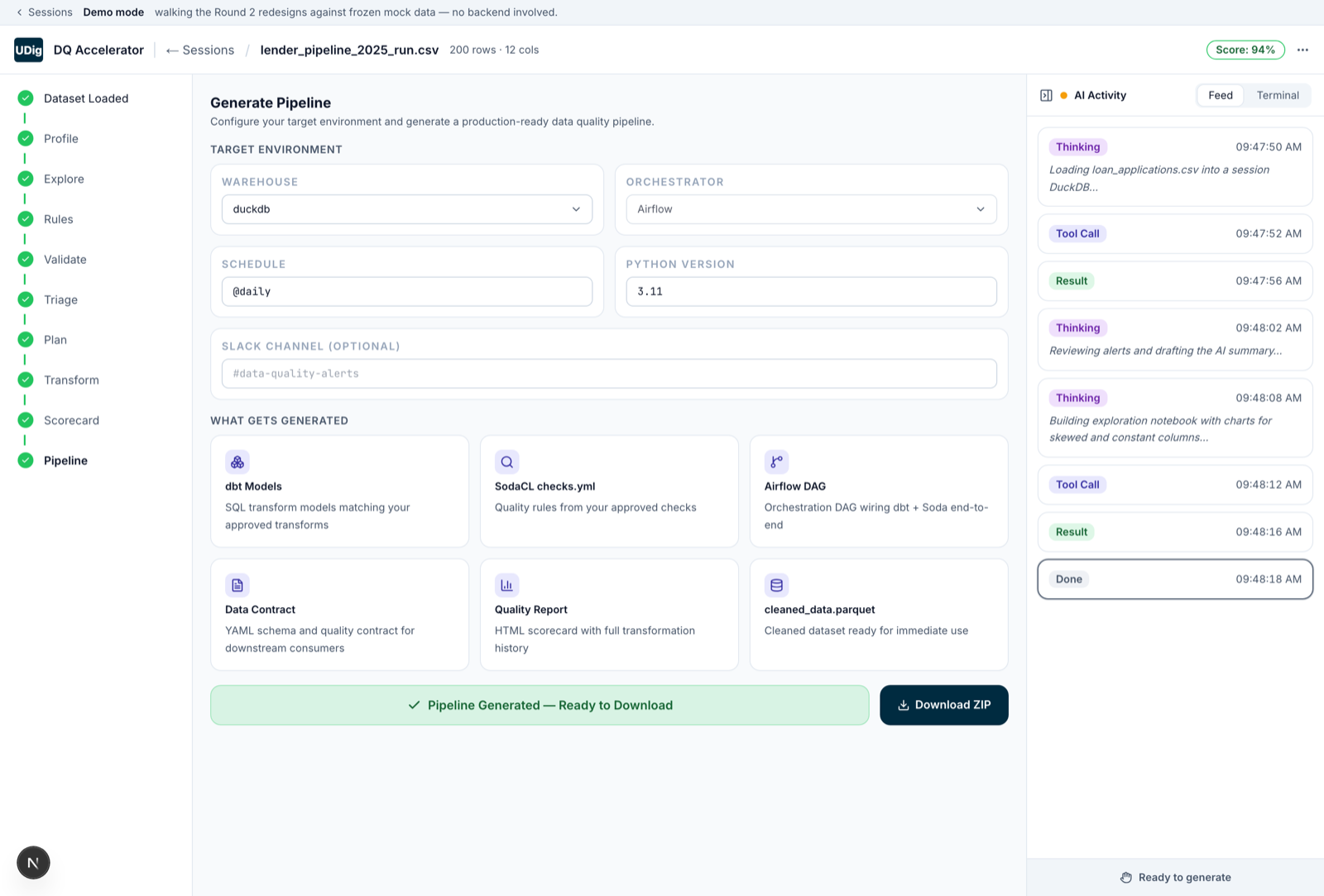
Assay profiles your data, proposes the rules it should pass, then walks you through validate, triage, and transform until the quality score climbs. You approve every step, and it hands back a production pipeline (dbt, Soda, Airflow) and a clean dataset at the end.

Why we built it: more AI projects die from the data than the model. If the set you're training on or handing to an agent isn't ready, nothing downstream is either. Assay answers the question most teams skip until it gets expensive: is this data actually AI-ready?

quality score AI-proposed rules human approval dbt / Soda / Airflow output
Assay data profile: an AI summary of a loan dataset with completeness, row and column counts, and flagged alerts, beside a nine-step guided workflow.
Assay validation results showing an 82% quality score across completeness, uniqueness, validity and consistency.
Assay quality scorecard showing a 90% score, a 12% improvement, and the full transform history.
Assay pipeline generation step producing dbt models, SodaCL checks, an Airflow DAG and a cleaned dataset.

From raw file to production pipeline in nine guided steps, with you approving every one.

These aren't a sales pitch. Relay, TAT, and Assay are simply how we work, shown in the open. Some are internal-only today. If one of them would help your team, that's a conversation, not a checkout.

We don't pilot on you. We pilot on us.

The lab runs on one rule: nothing reaches a client until it has earned its keep inside UDig. Each tool starts from something our own team actually needed, gets built fast, and has to survive real use against our own numbers before it is allowed out.

Build it

It starts as something we needed ourselves, built fast and put straight into our own hands.

Run it on ourselves

It ships into UDig's daily workflow first. If it doesn't survive our team, it never reaches yours.

Prove it with our numbers

Real usage, real friction. Every claim gets held to our own metrics before we make it.

Ship what survives

What clears the bar leaves the lab. You get the proven 20%, not the pitch.

Everything we learn running it feeds the next build.

So what does that get you?

We don't learn on your timeline or your budget. By the time a tool, a pattern, or an approach reaches you, it has already been run, measured, and broken on us first.

/ Battle-tested, not beta

You get the version that already survived our own team, not a hopeful first draft we're trying out on you.

/ Adoption built in

We've already watched what makes people actually use a thing, and what makes them quietly walk away from it.

/ Evidence, not opinions

Every claim we bring you is one we held to our own numbers before it ever left the building.

The hard, human work is figuring out the right problem to solve, then proving, with evidence, that you actually solved it.
Reid Braswell & Josh Bartels  /  UDig

UDig Labs is the R&D arm of UDig, a technology consultancy that helps teams turn big ideas into real impact. The lab is where we prove the tools and ideas before they ever land on a client. More about UDig →

Want the other 20%?

See the tools running live, or talk to the team that builds them, ships them, and runs them on themselves first.